
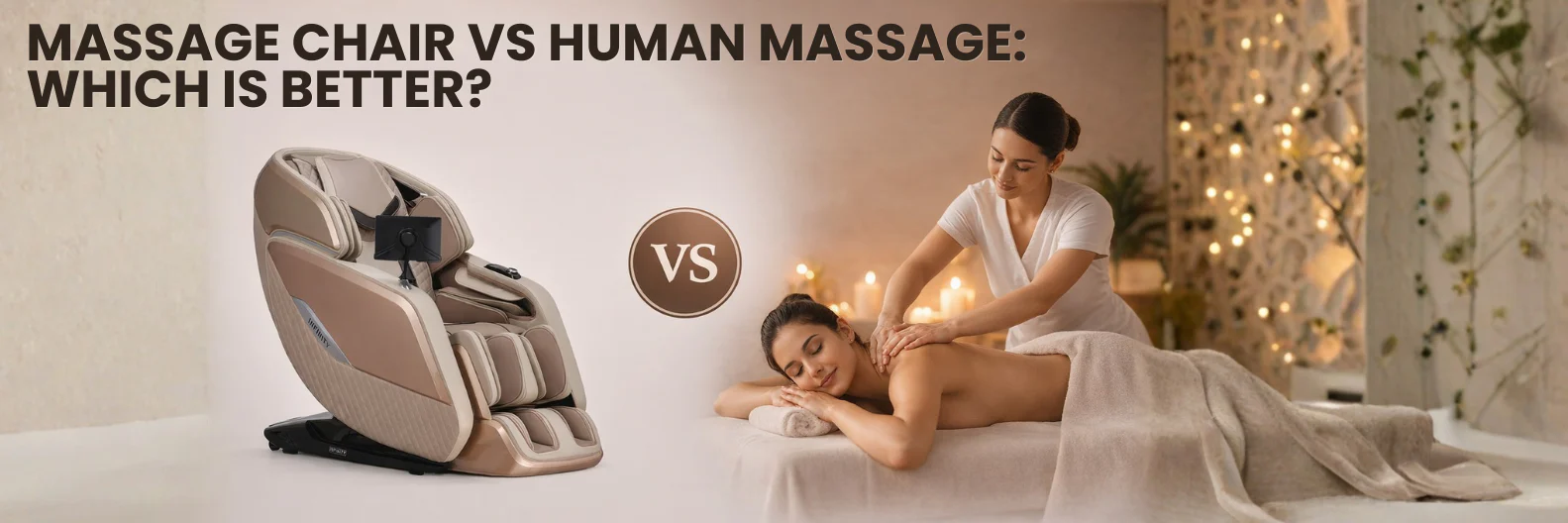
Many individuals seeking therapeutic relief face a common dilemma when evaluating their wellness routines: choosing between an top-rated massage chair vs a massage therapist. Both options provide substantial physical benefits, from reducing muscle tension to improving lymphatic circulation. However, the specific advantages of each method differ significantly regarding accessibility, financial investment, and technological capabilities.
Understanding the structural differences between mechanical and human massage helps consumers make informed decisions about their physical recovery. Traditional massage therapy relies on human intuition and anatomical familiarity. A licensed therapist can adapt their pressure dynamically based on verbal feedback or physical responses during a session.
Conversely, modern wellness technology has engineered sophisticated mechanical alternatives. Advanced robotic mechanisms now replicate complex human movements through 3D and 4D roller systems. By carefully evaluating the long-term cost benefits and the unparalleled convenience of automated systems, consumers can determine which therapeutic modality best aligns with their lifestyle requirements. Even some of the best massage chairs may not truly feel like human hands but they come really close.
The Financial Equation: Long-Term Cost Savings
Evaluating the financial impact of regular therapeutic treatments requires a multi-year perspective. A standard session with a licensed massage therapist typically costs between $75 and $150 per hour, excluding gratuity and travel expenses. For an individual seeking weekly relief for chronic back pain or athletic recovery, this routine easily exceeds $5,000 annually. Over a five-year period, the cumulative expenditure becomes a substantial financial burden.
Purchasing a massage chair presents a distinctly different financial model. While the initial cost requires an investment, the system pays for itself through frequent use. When multiple household members utilize the equipment, the return on investment accelerates exponentially.
Convenience vs Customization
The scheduling logistics of traditional massage therapy often present a barrier to consistent care. Securing an appointment requires aligning your schedule with clinic availability, navigating traffic, and dedicating several hours to a single session. This rigid structure often prevents individuals from receiving immediate relief precisely when acute muscle stiffness or tension strikes.
Automated therapeutic systems eliminate these logistical hurdles entirely. High-end robotic systems offer 24-hour accessibility directly within your residence. You can initiate a comprehensive decompression session at midnight after a strenuous shift or immediately following an intense morning workout. This immediate availability ensures that muscle recovery happens optimally, rather than waiting days for an available clinical appointment.
While traditionalists argue that human therapists offer superior customization, elite massage chairs now bridge this gap through sophisticated bio-mapping technology. Modern systems utilize advanced optical sensors to scan the user’s skeletal structure before initiating a program. The software then calibrates the rollers to match the specific curvature of the user’s spine, ensuring precise targeting of acupressure points.
Analyzing the Technology Behind the Therapy
The engineering integrated into contemporary wellness seating rivals the complexity found in commercial medical equipment. Top-tier manufacturers utilize Dual-Track and L-Track configurations to extend the therapeutic coverage from the cervical spine down through the gluteal muscles and hamstrings. Synchronized air compression cells operate alongside mechanical rollers to facilitate lymphatic drainage and improve peripheral circulation.
When consumers research these advanced systems, examining massage chair ratings provides vital insights into mechanical reliability and therapeutic efficacy. Independent reviews often highlight the durability of the internal motors and the precision of the variable-speed rollers.
Conducting a thorough massage chair comparison is essential for identifying the specific mechanisms that address your unique physiological requirements. Some users require intense deep-tissue manipulation through 4D mechanisms, while others prioritize gentle zero-gravity spinal decompression. Evaluating the Best Massage Chair Brands ensures you secure a system engineered with premium components and backed by comprehensive warranties.
Solutions for Businesses and Local Markets
The financial and physical benefits of automated therapy extend beyond residential applications. Corporate wellness programs and high-end fitness facilities increasingly integrate Commercial Massage Chairs into their amenities. Providing clients and employees with immediate access to mechanical therapy improves overall satisfaction and aids in muscular recovery. Business owners investing in commercial massage chairs often see elevated client retention rates and enhanced workplace morale.
Maximizing Your Wellness Investment
Securing consistent, high-quality therapeutic relief does not require endless scheduling conflicts or prohibitive recurring costs. By investing in an advanced mechanical system, you gain immediate access to customized muscular recovery, precise spinal decompression, and targeted thermal therapy. The mathematical reality of the cost savings, combined with the unparalleled convenience of on-demand treatment, positions these technological solutions as the superior choice for daily physical maintenance.
To ensure you select the optimal equipment for your specific physiological needs and budget, detailed research is imperative. Understanding the nuances between different manufacturers and their proprietary engineering will guide you to the perfect solution.
Frequently Asked Questions
Can a mechanical system truly replace a human therapist?
For many individuals, yes. While a machine lacks human empathy, the advanced 4D rollers and automated body-scanning technology found in premium models effectively replicate complex kneading, tapping, and shiatsu techniques. The 24/7 availability often leads to more consistent therapy, which yields superior long-term physiological benefits.
Are these systems difficult to maintain?
Premium therapeutic seating requires minimal maintenance. The internal mechanisms are engineered for thousands of hours of operation. Users simply need to keep the synthetic leather surfaces clean and ensure the system is positioned correctly to allow for full zero-gravity reclining.
Does zero-gravity reclining actually improve the experience?
Absolutely. The zero-gravity position elevates the user’s legs to the same level as their heart. This specific orientation minimizes gravitational pressure on the lumbar spine and allows the best massage chair rollers to achieve deeper tissue penetration with less overall force.

